OSB A Comprehensive Guide
Oriented Strand Board (OSB): A Comprehensive Guide

What is OSB?
Oriented Strand Board (OSB) is an engineered wood panel made by compressing layers of wood strands (flakes) with adhesives. Known for its strength, durability, and cost-effectiveness, OSB is widely used in construction and industrial applications. Unlike traditional plywood, OSB utilizes fast-growing, sustainable wood species, arranged in cross-oriented layers to enhance structural integrity. Its rough, variegated surface and distinctive "woven" texture make it easily recognizable.
Production Process of OSB
-
Raw Material Sourcing: Logs (typically aspen, pine, or poplar) are debarked and cut into thin strands.
-
Drying: Strands are dried to reduce moisture content.
-
Blending with Adhesives: Strands are mixed with waterproof resins, such as phenol-formaldehyde (PF) or methyl diphenyl diisocyanate (MDI).
-
Layering: Strands are oriented in perpendicular layers using specialized equipment to maximize strength.
-
Hot Pressing: Layers are compressed under high heat (200–250°C) and pressure to form dense panels.
-
Cutting and Finishing: Panels are trimmed to standard sizes (e.g., 4x8 feet) and edges are sealed for moisture resistance.
-
Quality Control: Panels undergo testing for strength, moisture resistance, and dimensional stability.
Storage Recommendations
-
Store OSB horizontally on a flat, dry surface to prevent warping.
-
Protect from prolonged exposure to moisture or direct sunlight.
-
Use pallets or spacers to elevate panels above ground in humid environments.
-
For outdoor storage, cover with waterproof tarps and ensure adequate ventilation.
Applications of OSB
-
Construction:
-
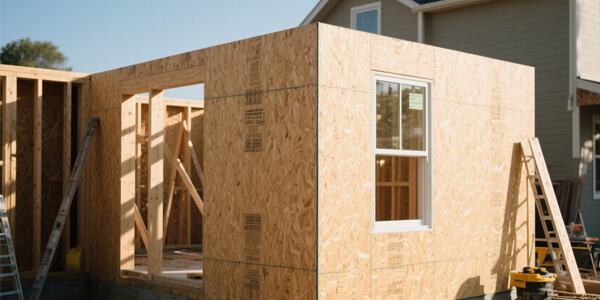
Sheathing: Walls, roofs, and subfloors.
-
Structural Panels: I-joists, beams, and load-bearing walls.
-
-
Furniture: Shelving, cabinetry, and temporary fixtures.
-
Packaging: Crates, pallets, and reusable containers.
-
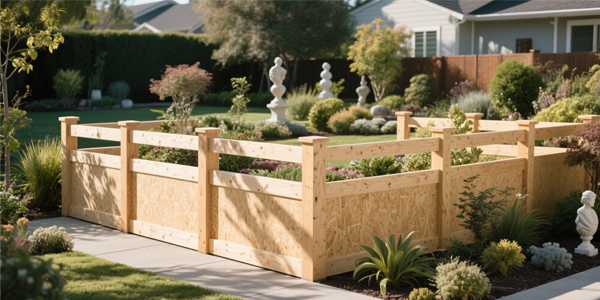
Interior Design: Accent walls, ceiling panels, and DIY projects.
-
Industrial Uses: Concrete formwork and flooring underlayment.
Certifications and Standards
-
APA – The Engineered Wood Association: Certifies load-bearing capacity and performance (e.g., APA PRP-108).
-
EN 300 (Europe): Classifies OSB into four grades based on moisture resistance and mechanical properties (OSB/1 to OSB/4).
-
CARB Phase 2: Ensures low formaldehyde emissions (critical for indoor air quality).
-
FSC/PEFC: Certifies sustainable forestry practices.
-
LEED Contribution: OSB made from recycled content or FSC-certified wood can contribute to LEED credits.
OSB Buying Guide
-
Determine Purpose:
-
OSB/2: For dry indoor applications (e.g., furniture).
-
OSB/3: Moisture-resistant for roofs and walls (common in North America).
-
OSB/4: Heavy-duty for structural loads.
-
-
Check Certifications: Look for APA, EN 300, or CARB labels.
-
Assess Moisture Resistance: Opt for panels labeled "Exterior" or "Waterproof" if used in damp areas.
-
Compare Thickness: Ranges from 6mm (1/4") to 25mm (1"); thicker panels offer higher load capacity.
-
Evaluate Edge Quality: Square edges for seamless joints; tongue-and-groove edges for flooring.
-
Supplier Reputation: Choose manufacturers with proven track records (e.g., Norbord, LP Building Solutions).
-
Cost Considerations: OSB is typically 20–30% cheaper than plywood but may require additional coatings for aesthetics.
Conclusion
OSB’s versatility, eco-friendliness, and affordability make it a staple in modern construction and design. By selecting the right grade, ensuring proper storage, and verifying certifications, users can maximize its performance across diverse applications. As sustainable building practices grow, OSB continues to solidify its role as a reliable, future-proof material.
OSB Manufacturing, Properties, and Sustainable Applications in Modern Construction
Pioneering Excellence in Construction Materials
Related Article