フレーミングLVLの利点と欠点および適用シナリオ
著者: PIONEER
2026-01-28
Frame LVL is an engineered wood beam optimized for building framing applications, manufactured by face-gluing rotary-cut veneers in a parallel grain orientation and bonding them under high pressure. While retaining the general properties of standard LVL, it features enhanced dimensional accuracy and structural strength to suit framing construction needs, and is also a mainstream product category for exported wood panels. Below is a breakdown of its core strengths, weaknesses and application scenarios:
I. Core Advantages (Key Features for Building Framing)
-
High structural strength and stable performanceThe parallel grain lamination process eliminates natural defects in solid wood such as knots and cracks. Frame LVL boasts far superior longitudinal modulus of rupture and bending strength compared to solid wood beams of the same specification, with high strength uniformity. It resists fracture and deformation in framing construction, enabling stable load-bearing for roof and floor structures.
-
Exceptional dimensional accuracy for high construction efficiencyIndustrial production allows for customized fixed lengths (e.g., 3m, 6m, 9m) and uniform cross-sectional dimensions, free from warping, twisting and cracking issues of solid wood. No additional straightening is required for on-site cutting and splicing, which directly fits framing assembly, significantly reducing construction waste and man-hours.
-
Controllable moisture content and strong anti-deformation capacityVeneers undergo strict drying during production, resulting in a finished product with a stable moisture content of 8%-12% (suitable for mainstream construction environments). The product has extremely low shrinkage and expansion rates in indoor/outdoor environments with temperature and humidity changes, preventing gaps and loosening in the frame caused by wood deformation.
-
High material utilization and cost-effectiveness over solid woodMade from fast-growing timber (e.g., pine, poplar), it maximizes wood resource utilization with no waste areas in the finished product. Compared to solid wood beams (with low actual usability due to natural defects), it offers a lower procurement cost for the same engineering volume and can be recycled (if undamaged).
-
Easy construction and lightweight handlingWith a lower density than solid wood and steel, it weighs approximately 1/10 of steel and 1/4 of concrete for the same specification. Manual handling and installation are feasible on-site without large hoisting equipment, making it suitable for the rapid framing construction of multi-storey light steel villas and wood structure buildings.
-
Customizable anti-corrosion/fire resistance for diverse environmentsVacuum pressure impregnation for anti-corrosion and fire resistance can be applied during production to create anti-corrosion Frame LVL and fire-resistant Frame LVL, meeting the usage requirements of outdoor open framing and buildings with high fire protection standards, with long-lasting performance after treatment.
-
Environmentally compliant and easy to pass import and export certificationsProduced with eco-friendly adhesives (e.g., E0, E1 grade) and meeting formaldehyde emission standards, it can also obtain forest certifications such as FSC and PEFC. It complies with the environmental requirements of domestic and international construction projects, and also has a core advantage in foreign trade export (no quarantine risks of solid wood and a simpler fumigation process).

II. Main Disadvantages
-
Low transverse strength, unable to bear cross-grain loadsDue to the parallel grain lamination of veneers, the transverse bending and shear strength is extremely low. Strict compliance with load-bearing along the grain direction is mandatory in construction. Fracture is highly likely if installed against the grain or subjected to transverse loads, imposing high requirements on construction techniques.
-
Poor surface wear resistance and prone to damageThe surface lacks the natural grain protective layer of solid wood and is susceptible to peeling and damage from impact and scratch during on-site construction. Additional protective treatment (e.g., painting, veneering) is required, otherwise the appearance and service life will be affected.
-
Weather resistance determined by adhesive performance; inferior products prone to delaminationWater and temperature resistance depend entirely on the adhesive: products using ordinary urea-formaldehyde adhesives are prone to delamination in humid and high-temperature environments (e.g., rainy seasons in southern regions, outdoor open areas). Only products using weather-resistant adhesives such as phenolic resin can adapt to harsh environments, with a corresponding increase in cost.
-
Limited recyclability and no secondary processing possibleIf the finished product delaminates or fractures, it cannot be re-planed or spliced for secondary use like solid wood and can only be treated as waste. The laminated structure also makes it difficult to recycle and reuse, resulting in a lower resource utilization rate than solid wood.
-
Higher unit price than low-grade ordinary solid wood beamsCompared to unprocessed low-grade solid wood beams, industrially produced Frame LVL has a higher unit price. For projects with an extremely tight budget, some contractors may opt for solid wood beam alternatives (though the actual construction waste will offset the cost advantage).
III. Core Application Scenarios (Focus on Building Framing, Extended to Supporting Structures)
1. Core Framing of Wood Structure Buildings (Most Mainstream Scenario)
- Light wood structure villas/residential buildings: Used as main beams, secondary beams, joists and columns to construct the core framing of floors, roofs and walls, replacing traditional solid wood beams and suitable for prefabricated construction.
- Wood structure homestays and light prefab houses: The overall lightweight frame enables rapid on-site assembly with stable dimensions, suitable for temporary/permanent buildings in rural areas and scenic spots.
2. Supporting Framing for Steel-Wood Hybrid Buildings
Serving as the secondary structural support for light steel frames (e.g., roof joists and floor deck supports for light steel structures), it leverages its high dimensional accuracy to make up for the poor local adaptability of light steel frames and improve the overall structural stability.
3. Temporary/Support Structures in Construction Projects
- On-site temporary facilities: Framing for temporary construction sheds and hoardings, and auxiliary materials for construction scaffolding (replacing part of steel pipes for lightweight handling).
- Formwork support systems: Used as wooden battens for construction formwork, with uniform dimensions to bear formwork loads evenly and a much higher number of reuses than solid wood beams, reducing the cost of engineering consumables.
4. Outdoor Buildings and Supporting Structures (Weather-Resistant Customization Required)
- Outdoor landscape architecture: Support framing for wooden plank roads, columns/transverse beams for verandas (anti-corrosion and waterproof treatment required).
- Agricultural facilities: Framing for greenhouses, featuring lightweight design and good wind resistance, suitable for curved/linear greenhouse structures.
5. Supporting Projects for Foreign Trade Export
As a mainstream category of exported wood panels, it is adapted to the light wood structure construction market in North America, Europe, Australia and other overseas regions. These regions have high requirements for dimensional accuracy, environmental certification and quarantine of engineered wood beams, and Frame LVL is easier to pass import and export inspections than solid wood beams (no natural defects and a simpler fumigation certificate application process).
6. Other Supporting Structures
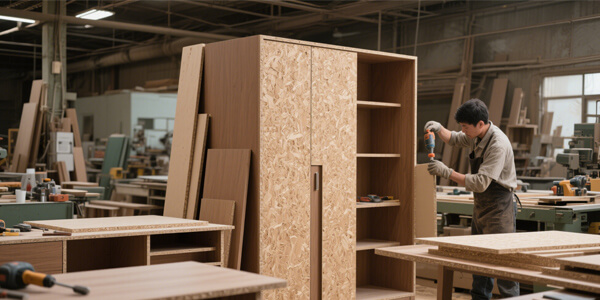
- Furniture framing: Load-bearing columns for large wardrobes and bookcases (indoor scenarios, no weather-resistant treatment required).
- Load-bearing framing for packaging: Export packaging for high-end heavy equipment, used as load-bearing beams for packaging bases to replace solid wood beams, reducing quarantine risks and adapting to international logistics and transportation.
配向性ストランドボード 建設および産業用途向け総合ガイド
関連記事
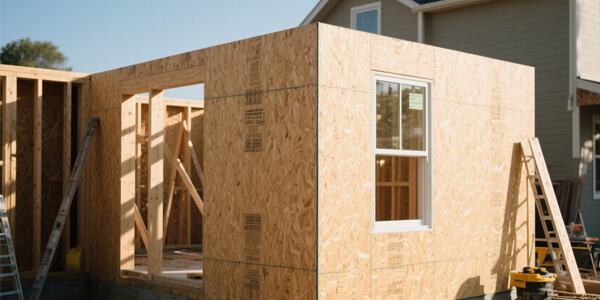
配向性ストランドボード (OSB) は、多用途でコスト効率が高く、耐久性に優れた人工木材製品として、建設業界と製造業界に革命をもたらしました。
配向性ストランドボード 建設および産業用途向け総合ガイド
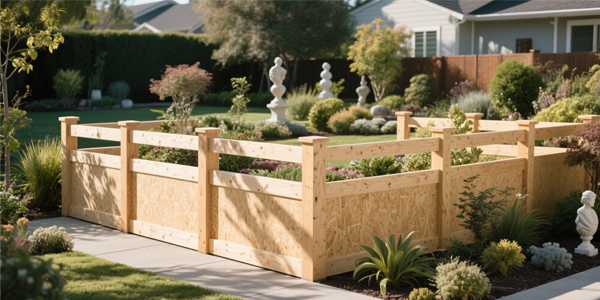
優れた強度と耐湿性を実現するよう設計された OSB ボードは、屋根、壁、防水用途に多用途で長持ちするソリューションを提供し、耐久性とコスト効率を兼ね備え、従来の合板を上回ります。
屋根、壁、防水プロジェクトに最適な多用途で耐久性のあるOSBボードソリューション