

構造のための安い価格 8mm の OSB 板
Cheap Price 8mm OSB Board For Construction
構造のための安い価格 8mm の OSB 板
数量:
構造のための安い価格 8mm の OSB 板
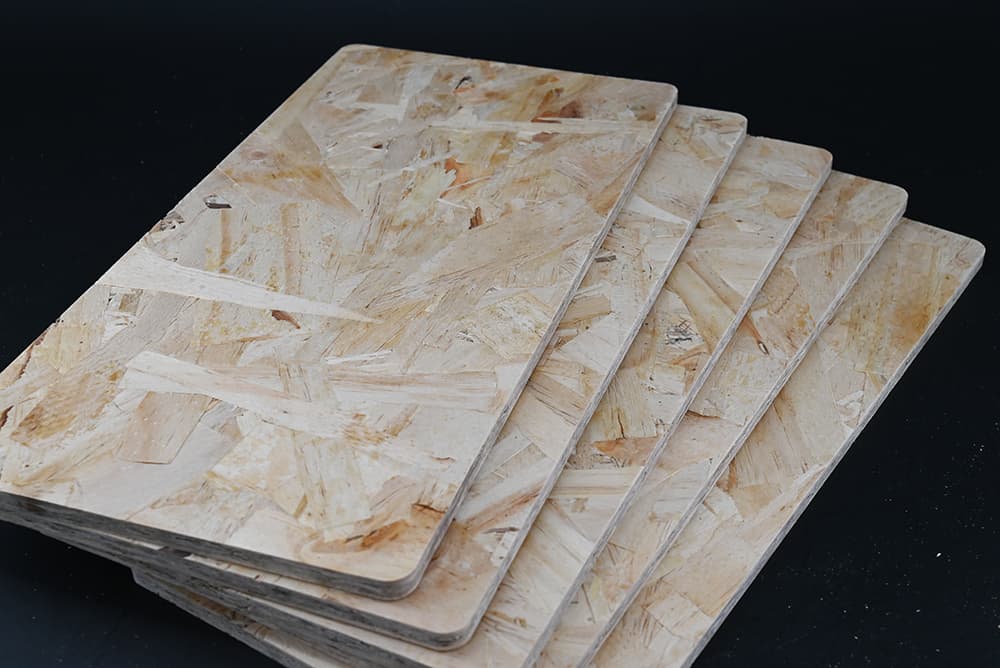
Chea 8mm OSB
- Product name:Cheap Price 8mm OSB Board For Construction
- Size:1220*2440mm,1250*2500mm,or According to customer requirements
- Thickness:6/8/9/11/12/15/18mm,etc.
- Thickness Tolerance:+/ -0.2mm
- Material:polar,pine,hardwood,etc.
- Density:620-730kg/CBM
- Glue:MR glue,Melamine glue,Phenolic glue,MDI glue
- Moisture:3-12%
- Application:Roof decking, furniture, packing, hoarding, signboards and portable building, constructional insulation board
- Hashtag:Chea 8mm OSB,Cheap Price 8mm OSB Board For Construction,China, manufacturers, suppliers, factory, wholesale
What is OSB?
OSB (Oriented Strand Board) is an engineered wood product made from strands of wood that are arranged in layers and bonded together using adhesives. The strands are oriented in different directions to provide strength and durability, making OSB a versatile material used in construction and other applications. The main features and characteristics of OSB include:
Composition:
Wood Strands: The board is made from large wood strands (typically from softwoods like pine or spruce) that are shaped into thin, long pieces. These strands are then oriented in specific directions in multiple layers to enhance strength.
Adhesive: The strands are bonded with a resin adhesive, typically a type of phenolic or melamine-based resin, which is heat-cured to provide the board's durability and resistance to moisture.
Layering: OSB typically has three or more layers. The strands in the outer layers are oriented in the direction of the board's length, while the inner layers are usually oriented at 90 degrees to them, creating a cross-laminated structure that adds strength and stability.
Types of OSB:
OSB/1: General-purpose board for dry conditions (interior applications).
OSB/2: Load-bearing board for dry conditions.
OSB/3: Load-bearing board for humid conditions (commonly used in structural applications such as flooring, walls, and roofing).
OSB/4: Higher strength boards for use in extreme conditions, though not as common.
Key Properties:
Strength and Durability: OSB is known for its high strength-to-weight ratio, making it ideal for structural applications like walls, floors, and roofs.
Versatility: OSB can be used in a variety of applications, including furniture, sheathing, packaging, and as a substrate for laminates.
Cost-Effective: Compared to other engineered wood products like plywood, OSB tends to be less expensive while providing similar structural properties.
Environmental Considerations: OSB can be considered more eco-friendly compared to traditional plywood because it uses smaller, often faster-growing trees and wood by-products, leading to better resource efficiency.
Common Applications:
Construction: OSB is widely used in the construction of homes, commercial buildings, and industrial structures. It is commonly used for flooring, roofing, wall sheathing, and as a structural element.
Furniture: OSB is also used for making furniture, especially in budget-friendly, modular pieces.
Packaging: Because of its strength and rigidity, OSB is used in crates, pallets, and other types of packaging materials.
Wood Strands: The board is made from large wood strands (typically from softwoods like pine or spruce) that are shaped into thin, long pieces. These strands are then oriented in specific directions in multiple layers to enhance strength.
Adhesive: The strands are bonded with a resin adhesive, typically a type of phenolic or melamine-based resin, which is heat-cured to provide the board's durability and resistance to moisture.
Layering: OSB typically has three or more layers. The strands in the outer layers are oriented in the direction of the board's length, while the inner layers are usually oriented at 90 degrees to them, creating a cross-laminated structure that adds strength and stability.
Types of OSB:
OSB/1: General-purpose board for dry conditions (interior applications).
OSB/2: Load-bearing board for dry conditions.
OSB/3: Load-bearing board for humid conditions (commonly used in structural applications such as flooring, walls, and roofing).
OSB/4: Higher strength boards for use in extreme conditions, though not as common.
Key Properties:
Strength and Durability: OSB is known for its high strength-to-weight ratio, making it ideal for structural applications like walls, floors, and roofs.
Versatility: OSB can be used in a variety of applications, including furniture, sheathing, packaging, and as a substrate for laminates.
Cost-Effective: Compared to other engineered wood products like plywood, OSB tends to be less expensive while providing similar structural properties.
Environmental Considerations: OSB can be considered more eco-friendly compared to traditional plywood because it uses smaller, often faster-growing trees and wood by-products, leading to better resource efficiency.
Common Applications:
Construction: OSB is widely used in the construction of homes, commercial buildings, and industrial structures. It is commonly used for flooring, roofing, wall sheathing, and as a structural element.
Furniture: OSB is also used for making furniture, especially in budget-friendly, modular pieces.
Packaging: Because of its strength and rigidity, OSB is used in crates, pallets, and other types of packaging materials.
おすすめ商品


